
Corpus Christi in Valencia: one of its oldest celebrations
This year, Valencia celebrated the 700th anniversary of Corpus Christi, one of the city’s oldest and most beloved traditions.
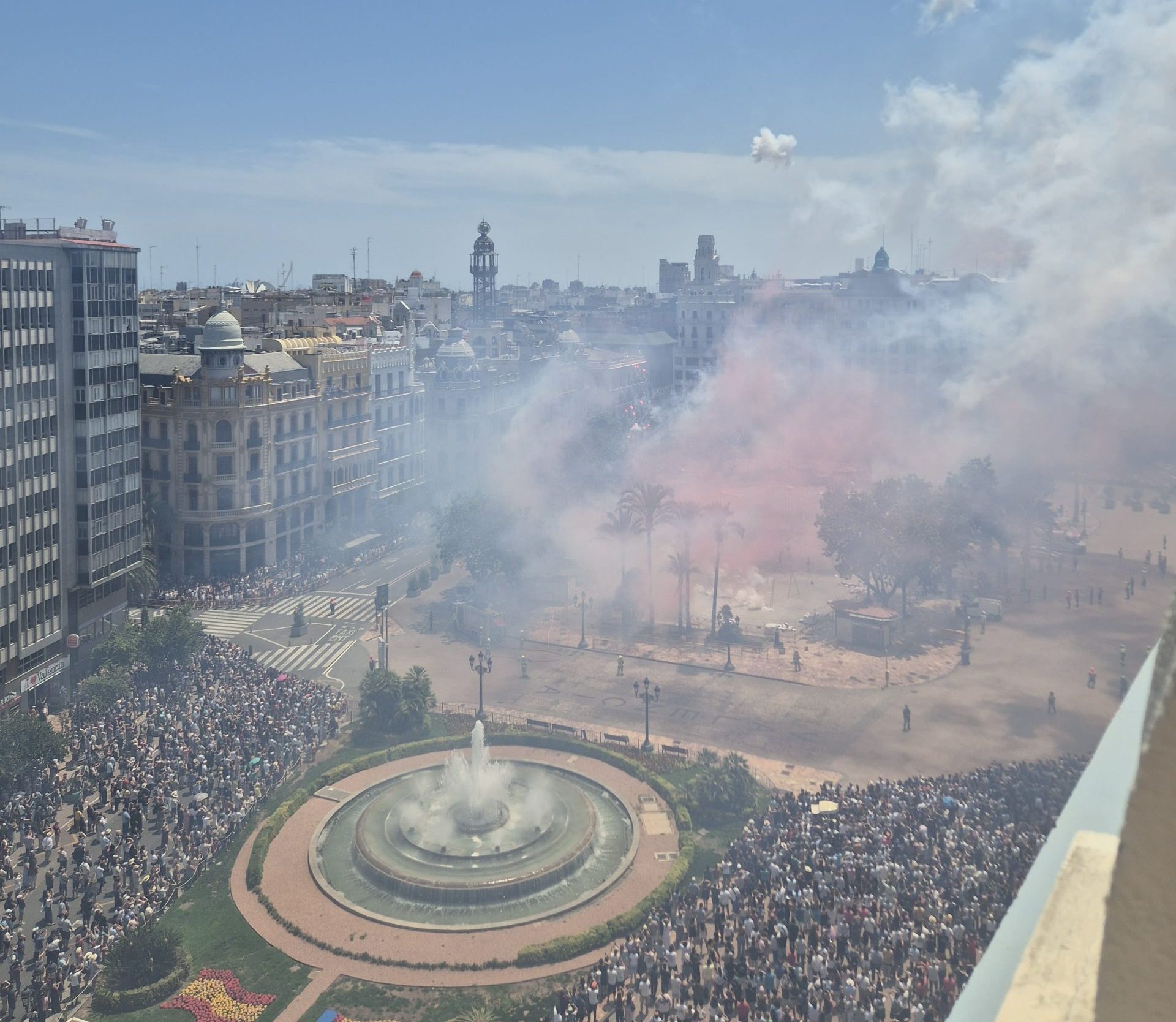
Corpus Christi is one of Valencia’s oldest celebrations
If you happened to walk through Valencia’s historic centre this June, you may have encountered giant figures, elaborate costumes, traditional dances, flower-covered streets, and a procession unlike anything you expected.
At first glance, Corpus Christi can feel surprising, even mysterious.
Part religious celebration, part street theatre, part living museum, it is one of the oldest traditions in Valencia and one of the most fascinating ways to understand the city beyond its monuments and postcard images.
This year was particularly special. Valencia celebrated the 700th anniversary of Corpus Christi, marking seven centuries of a tradition that continues to bring together faith, history, folklore, and community life.
When people think about Valencia, they usually think about Fallas
And while Fallas is undoubtedly the city’s most famous festival, Corpus Christi tells a different story.
To understand Corpus Christi, you have to look beyond the procession itself and pay attention to the details. The handmade costumes, the traditional dances, the children watching from balconies, the scent of flowers in the streets, and the elderly Valencians who still remember participating in the celebration decades ago.
More than an event, Corpus Christi is a living expression of the city’s identity.
Why was 2026 a special year for Corpus Christi in Valencia?
The 2026 edition of Corpus Christi held particular significance for Valencia as the city celebrated the festival’s 700th anniversary.
For seven centuries, this tradition has been woven into the fabric of Valencian life, surviving political change, social transformation, and the rapid modernisation of the city.
What began as a religious feast honouring the Eucharist gradually evolved into something much broader. Over time, Corpus Christi absorbed elements of theatre, music, folklore, civic pride, and popular culture, becoming one of Valencia’s most distinctive cultural traditions.
The anniversary celebrations reflected that rich heritage. Historic streets were decorated with flowers, special performances were added to the programme, and thousands of residents gathered to take part in rituals that have been passed down through generations.
Yet perhaps the most remarkable aspect of Corpus Christi is not its age, but its continuity.
Many of the characters, dances, symbols, and traditions that shaped the festival centuries ago are still present today. In a world where local customs are often simplified or forgotten, Corpus Christi remains a living tradition that continues to connect Valencia with its past.
The 700th anniversary was therefore more than a celebration of history. It was a reminder that Valencia’s identity is still deeply rooted in the traditions, stories, and collective memory that continue to animate the city today.
More than a religious procession
For visitors unfamiliar with the festival, it can be tempting to see Corpus Christi simply as a religious event.
But that would miss much of what makes it unique.
Historically, the celebration served as a way of teaching biblical stories to a largely illiterate population. Through costumes, music, giant figures, dances, and symbolic characters, complex religious ideas became accessible and memorable.
The streets became a stage.
Religion, art, folklore, and public life blended together in a form that feels surprisingly theatrical even today.
This combination of sacred and popular culture is one of the reasons Corpus Christi remains so distinctive compared to many other European religious festivals.
The strange and fascinating characters of Corpus Christi in Valencia
One of the most memorable aspects of Corpus Christi is its cast of characters.
There are giants representing historical and biblical figures. Traditional dancers perform choreographies that have been preserved for generations. Mythical creatures appear alongside saints and religious symbols.
Perhaps the most famous is the Tarasca, a dragon-like creature that has become one of the festival’s most recognisable figures.
For first-time visitors, these characters can seem almost surreal.
Yet they reveal something important about Valencia’s history.
Corpus Christi was never intended to be a purely solemn ceremony. It was designed to engage, educate, entertain, and create a shared experience for the entire city.
The result is a celebration where medieval symbolism still coexists with contemporary life. Visitors interested in learning more about the festival’s origins, traditions, and symbolic characters can explore the Corpus Christi Museum, located in Valencia’s historic centre.
Why the festival still matters today
Many historical traditions survive only as performances for visitors.
Corpus Christi feels different.
While tourists are certainly welcome, the festival remains deeply meaningful for many Valencians.
Families return year after year. Local associations dedicate countless hours to preserving costumes, dances, and rituals. Volunteers help organise events. Schools continue teaching younger generations about the celebration.
In a rapidly changing world, Corpus Christi provides continuity.
It connects present-day Valencia with the city that existed centuries ago.
And perhaps that is why the festival continues to resonate after seven hundred years.
What visitors should know if they experience Corpus Christi
If you are lucky enough to be in Valencia during Corpus Christi, the best advice is simple: slow down.
Do not focus only on the main procession.
Spend time observing the smaller details. Listen to the music. Watch the interactions between generations. Notice how local residents participate rather than simply observe.
Like many traditions in Valencia, Corpus Christi in Valencia is not only something to watch.
It is something to feel.
And through that experience, you begin to understand that Valencia is not defined solely by its architecture, beaches, or gastronomy.
It is also defined by the rituals, stories, and shared memories that continue to shape everyday life.
What Corpus Christi reveals about Valencia
Seven hundred years after its origins, Corpus Christi remains a reminder that Valencia is a city where history is not confined to museums.
It still walks through the streets.
It appears in costumes, dances, songs, and traditions that have survived wars, political change, and modernisation.
For visitors seeking a deeper understanding of Valencia, Corpus Christi in Valencia offers something rare: not just a glimpse into the city’s past, but a chance to see how that past continues to live in the present.
And perhaps that is why, after seven centuries, the celebration still matters. For more information about cultural events and traditions throughout the year, visitors can consult the official Valencia tourism website.
FAQ about Corpus Christi in Valencia
What is Corpus Christi in Valencia?
Corpus Christi is one of Valencia’s oldest religious and cultural celebrations. Dating back to 1325, it combines a religious procession with traditional dances, giant figures, historical characters, and popular folklore.
Why did Valencia celebrate 700 years of Corpus Christi?
Valencia celebrated the 700th anniversary of Corpus Christi because the tradition was first established in the city in 1325. The 2025 celebrations marked seven centuries of uninterrupted history and cultural heritage.
When does Corpus Christi take place in Valencia?
Corpus Christi is celebrated every year in late spring, usually between May and June, depending on the religious calendar.
What is the Tarasca in Valencia?
The Tarasca is a dragon-like figure that appears during Corpus Christi celebrations. It is one of the festival’s most recognisable symbols and forms part of the rich mixture of folklore, mythology, and religious tradition that characterises the event.
Is Corpus Christi worth seeing in Valencia?
Yes. While less internationally famous than Fallas, Corpus Christi offers a unique opportunity to experience Valencia’s cultural heritage through traditional dances, historical characters, music, and local participation.
Is Corpus Christi only a religious event?
Not entirely. Although it has religious origins, Corpus Christi in Valencia also includes folklore, theatre, music, dance, historical costumes, and community traditions that have evolved over centuries.
If you want to experience Valencian food culture more personally, you can also explore our small-group food and culture experiences and our best cafés experience in Valencia