
What Valencia’s last medieval gates reveal about the city
Most visitors see two towers. They are actually seeing the story of Valencia.
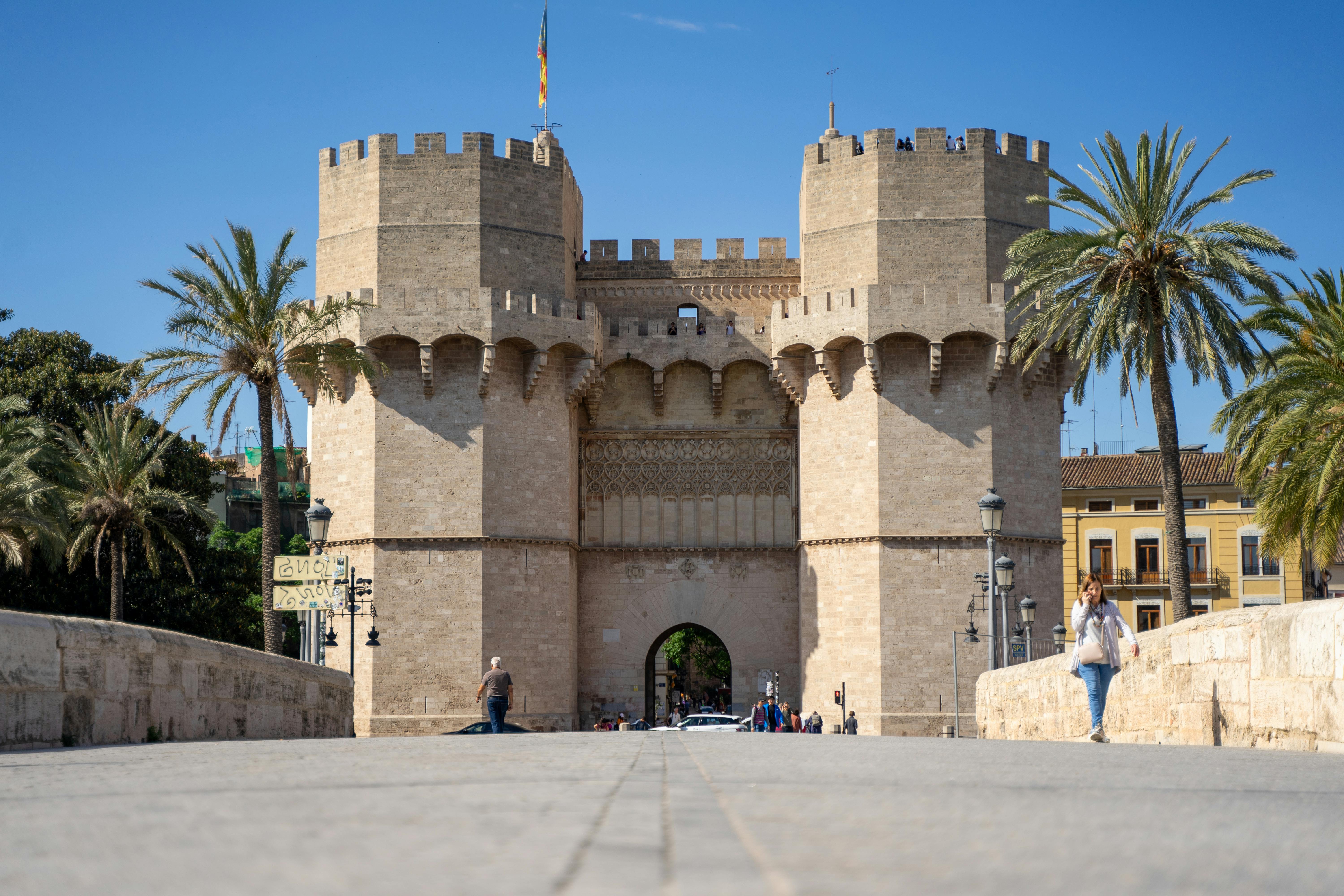
Walk through Valencia’s historic centre and sooner or later you will come across the Serranos Towers or the Quart Towers.
Most visitors stop to take a photo, admire the architecture, and continue exploring the city. But these towers are much more than beautiful medieval monuments.
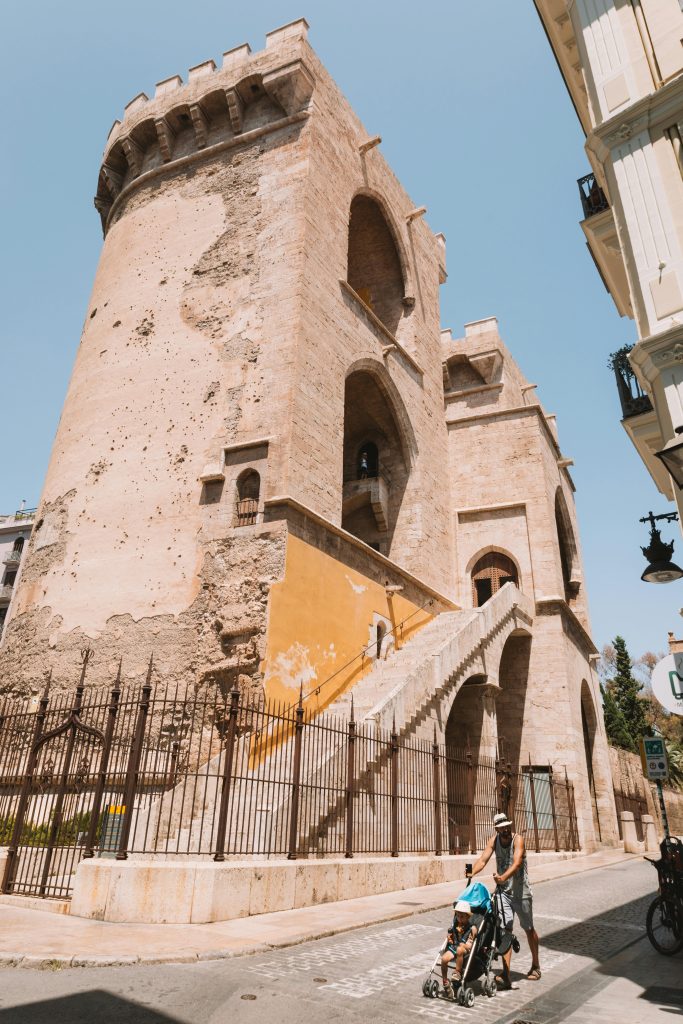
The last medieval gates of Valencia are more than monuments
They are among the last visible traces of a city that was once surrounded by walls, protected by gates, and shaped by trade, power, and ambition.
And if you take a closer look, they reveal something essential about Valencia itself.
Valencia The Serranos Towers and Quart Towers survived the city walls
For centuries, Valencia was enclosed within defensive walls. They protected the city from attacks, controlled who entered and left, and marked the boundary between urban life and the surrounding countryside.
The walls were eventually demolished in the nineteenth century as the city expanded beyond its medieval limits.
Yet two gates survived: the Serranos Towers to the north and the Quart Towers to the west.
Today, they stand almost alone, disconnected from the fortifications they once belonged to.
But precisely because the walls disappeared, the towers have become even more powerful symbols of Valencia’s past.
Valencia was one of the richest cities in the Mediterranean
To understand why these gates were built on such a monumental scale, it helps to understand Valencia’s importance during the late Middle Ages.
The city was not a provincial town on the edge of Europe.
It was a thriving Mediterranean centre connected to trade routes that linked the Iberian Peninsula with Italy, North Africa, and the wider Mediterranean world.
Silk, ceramics, spices, textiles, and agricultural products circulated through its markets. Merchants, travellers, diplomats, and sailors passed through Valencia’s gates every day.
The towers were not simply defensive structures.
They were also statements.
They announced to anyone arriving that Valencia was prosperous, powerful, and confident.
Why the Serranos Towers became a symbol of Valencia
The Serranos Towers are often considered the most spectacular medieval monument in Valencia.
Completed at the end of the fourteenth century, they combined military function with political symbolism.
Their scale was meant to inspire admiration.
Anyone approaching the city from the north would immediately understand that they were entering an important place.
The towers welcomed kings, ambassadors, merchants, and religious processions.
In many ways, they served as Valencia’s public face.
Today, climbing to the top of the Serranos Towers offers one of the best views over Valencia’s historic centre and remains one of the most rewarding things to do in Valencia.
What the Quart Towers reveal about Valencia’s history
While the Serranos Towers represent prestige and ceremony, the Quart Towers tell a different story.
Look closely at their stone walls and you will notice dozens of impact marks left by cannon fire.
These scars date from the Peninsular War in the early nineteenth century, when French troops bombarded Valencia.
Unlike many historical monuments, the damage was never fully erased.
The marks remain visible today.
They transform the Quart Towers into a rare historical document, preserving evidence of a specific moment of conflict.
The Quart Towers remind us that cities are not only shaped by periods of prosperity, but also by moments of resilience.
If you are interested in understanding how history still shapes everyday life in the city, you might also enjoy reading about what Americans usually misunderstand about Valencia
More than monuments, they are symbols of Valencia’s identity
Many cities preserve medieval buildings.
What makes Valencia’s gates particularly interesting is how they continue to define the city’s identity centuries later.
They appear on postcards, guidebooks, photographs, and local imagery.
They mark the transition between the modern city and Valencia’s historic centre.
This historic centre is also where many of the city’s most important food traditions continue to thrive, from local markets to family-run restaurants. If food is part of how you discover a place, you may enjoy our guide on what to eat in Valencia beyond paella.
Should you visit the Serranos Towers or the Quart Towers?
If you only have time for one visit, most travellers choose the Serranos Towers.
The views are exceptional, the structure is more imposing, and it plays a central role in Valencia’s image.
However, the Quart Towers are often quieter and offer something equally fascinating: visible traces of the city’s military past.
The best option is to visit both.
Together, they tell a much richer story about Valencia than either monument can tell alone.
Visitors looking for practical information about opening hours and tickets can consult the official Serranos Towers page.
What Valencia’s last medieval gates reveal about the city
The Serranos Towers and Quart Towers tell a story that goes beyond architecture.
They reveal a city shaped by commerce, openness, ambition, and resilience.
A city that grew through connections with the wider Mediterranean world.
A city that has constantly evolved while preserving traces of its past.
And perhaps that is why these towers continue to fascinate visitors.
They are not simply relics of medieval Valencia.
They are reminders that the city’s identity has always been built on movement, exchange, and the meeting of different worlds.
FAQ about the Serranos Towers and Quart Towers
Are the Serranos Towers worth visiting?
Yes. The Serranos Towers are one of Valencia’s most important historical landmarks and offer some of the best views of the historic centre.
What is the difference between the Serranos Towers and the Quart Towers?
The Serranos Towers were primarily ceremonial and defensive, while the Quart Towers are especially known for the cannonball marks left during the Peninsular War.Valencia more relaxed than Barcelona?
Many travellers noticWhat is the difference between the Serranos Towers and the Quart Towers?
The Serranos Towers were primarily ceremonial and defensive, while the Quart Towers are especially known for the cannonball marks left during the Peninsular War.
Can you climb the Serranos Towers?
Yes. Visitors can climb to the top and enjoy panoramic views of Valencia.
Why are there cannonball marks on the Quart Towers?
The marks were caused by French artillery during the Peninsular War in 1808-1814 and were intentionally preserved.
What happened to Valencia’s city walls?
Most of Valencia’s medieval walls were demolished in the nineteenth century as the city expanded, but the Serranos Towers and Quart Towers survived as historical landmarks.
If you want to experience Valencian food culture more personally, you can also explore our small-group food and culture experiences . and our best cafés experience in Valencia